
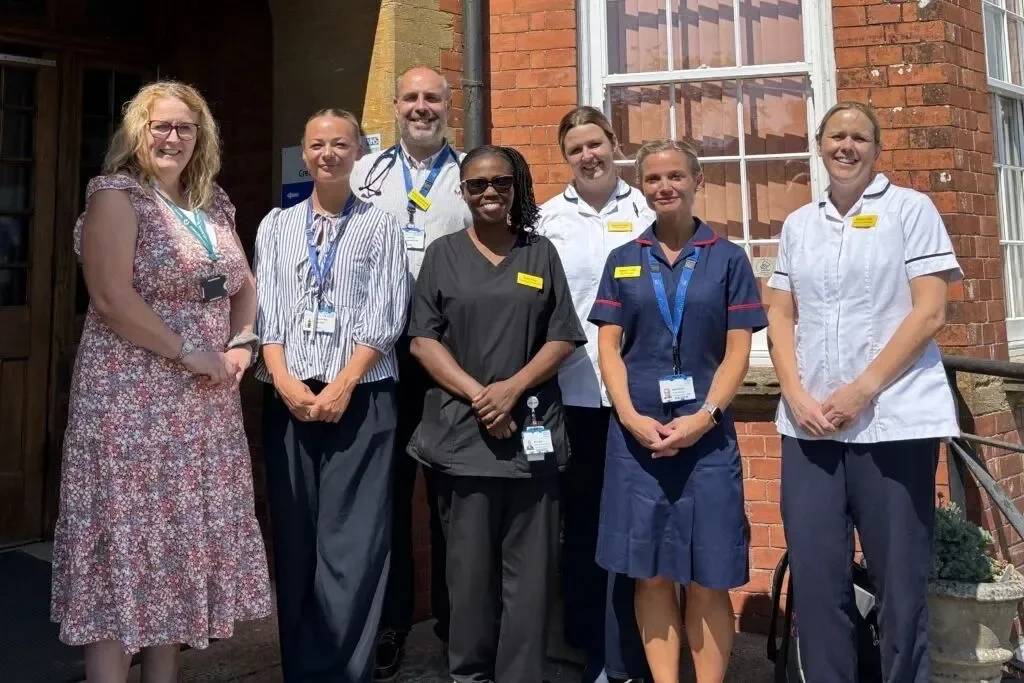
A quality improvement project that aims to help patients maintain their independence, dignity and mobility while in hospital is set to be expanded across Somerset.
The announcement of the rollout by Somerset NHS Foundation Trust follows encouraging early results from the initiative at its Crewkerne and Wincanton Community hospitals.
“We want to try to help people do things rather than do things for them”
Tania Collin
The initiative, led by hospital matron Tania Collin, encourages patients who are clinically able to get out of bed and use the toilet rather than relying on bedpans or bottles.
It is designed to tackle one of the biggest challenges facing healthcare services – namely the deconditioning that can occur when patients spend long periods inactive during a hospital stay.
The project was inspired by the national #EndPJParalysis campaign and also forms part of the trust’s Every Minute Matters campaign, noted those behind it.
A trial of the project began at Wincanton Hospital in June, before being introduced at Crewkerne Hospital shortly afterwards.
Under the trial, nursing, therapy and advanced clinical practitioner teams received training and worked together to identify patients who could safely be supported to stand, transfer or walk to the toilet as part of their rehabilitation.
Every patient was individually assessed and the approach was only used where it was judged to be clinically appropriate.
Early findings have shown a significant reduction in bedpan and bottle use, alongside positive feedback from both patients and colleagues, according to the trust.
Following the success of the trial, plans are now underway to extend the approach to Frome and West Mendip community hospitals, before expanding more widely across our other hospitals.
The longer-term ambition, said the trust, was to introduce the initiative within acute hospital settings at Musgrove Park Hospital and Yeovil Hospital.
Ms Collin said: “This quality improvement project is trying to achieve a reduction in deconditioning, which has such a devastating impact on elderly patients in particular and can affect their recovery, discharge and future care needs.
“It’s linked to dignity and confidence, which I feel is exceptionally important – I don’t think any of us would choose to use a bedpan behind a curtain. It’s so undignified and it’s really important that we address this.
“We also want to get a bit more normality into our hospitals for patients, as we can become task focused due to pressures on the wards,” she said.
“This is not in our patients’ best interests though, and changing our focus on toileting out of bed brings normality onto the ward and helps prevent deconditioning, confidence and ultimately independence.
She added: “We’re often very task-focused, but actually it’s the patients who we want to do this for because otherwise they can completely lose their independence.
“When they go home, they’re obviously going to need to use the toilet, so as simple as it may seem, we need to help them maintain those skills while they’re with us.”
The work has also strengthened multidisciplinary team working across the wards, with healthcare assistants, nurses and therapists working more closely together.
They were, the trust said, raising concerns earlier and identifying solutions more quickly when patients needed additional support.
Ms Collin said: “Our colleagues have really got on board with it and understand how it’s making a big difference. Just getting a patient standing up and helping them transfer can have a positive impact.”
Patient feedback has also been overwhelmingly positive, with many describing how being supported to walk to the toilet helped them feel more independent and closer to normal life, the trust said.
Audit data collected during the trial showed bedpan use reduced by 88% and bottle use by 86% compared to baseline levels.
Mobility data also found that seven out of 10 patients improved their mobility during their stay, while the remaining three maintained their existing level of independence.
Although the project has faced challenges, particularly overnight when patients could be more reluctant to mobilise, Ms Collin said she believed the benefits for patients and colleagues were clear.
“I think this is all about getting patients back to normality and being treated like a person rather than a patient, which is incredibly important,” she said. “We want to try to help people do things rather than do things for them.
“I also think this gives colleagues better job satisfaction because they can see how they’re helping somebody achieve something and maintain their independence. Personally, I’m really pleased with how it has impacted patients in such a positive way.”